2019-02-03 / Colin Fay / shiny, tips

A little trick for debugging Shiny

This is gonna be a short post about a little trick I’ve been using while developing Shiny Apps. (Spoiler: nothing revolutionary) A browser anywhere, anytime The first thing to do is to insert an action button, and a browser() in the observeEvent() watching this button. This is a standard approach: at any time, you just press this button, and you’re ...

2018-09-20 / Vincent Guyader / docker, server, shiny, shinyproxy

Shiny application in production with ShinyProxy, Docker and Debian

You created some great Shiny applications, following our advice of Shiny packaging for example, and you want to put them into production, self-hosting, so that others can enjoy them, without limitations, on the Internet or on an internal server of your company? ShinyProxy is for you! ShinyProxy v2.0 has recently been released. What a great opportunity to talk about its ...

2018-08-29 / Colin Fay / package, rstudio, server

Playing around with Posit/RStudio Package Manager

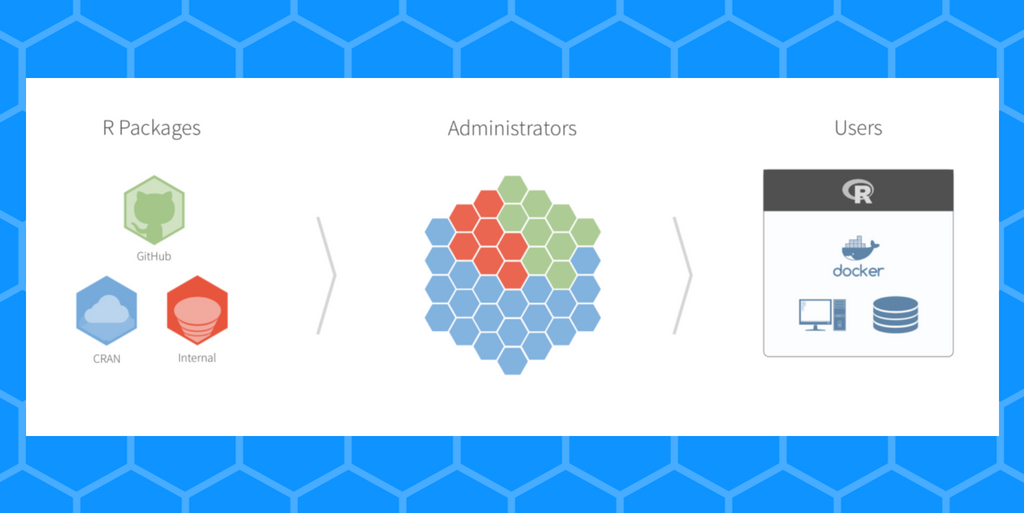
Managing packages in production is a lot of work: you have to juggle between versions, internal packages, CRAN updates, Bioconductor, GitHub sources… Let’s have a look into Posit RStudio Package Manager, one of the tools available that helps you dealing with this. What is love RSPM (Baby don’t hurt me, no more 🎶) RStudio Package Manager (or RSPM for short) ...

2018-07-11 / Colin Fay / dataviz, tidyverse

[ggplot2] Welcome viridis !

Let’s welcome the viridis palette into the new version of {ggplot2}! Viri-what ? viridis is one of the favorite color palettes of one of the member of the team (guesswho). The viridis palette was first developed for the python package matplotlib, and has been implemented in R since. The strengths of this palette are that: plots are beautiful (which is ...

2018-07-09 / Marion Louveaux / data, database, tidyverse

The Ten Commandments for a well-formatted database

Our diligent readers already know how important having well formatted data is for efficient statistical analyses. Here we gathered some advice on how to make a well structured database, in order to perform accurate analyses, and avoid driving your fellow analysts crazy. We are very grateful to Marion Louveaux, bio-image analyst for this translation of french version “Une base de ...

2018-06-07 / Colin Fay / docker, package, server

Dockerise and deploy your own R Archive Repo

There are several reasons you would want to deploy your own R archive repo: you don’t want to rely on GitHub for your dev packages, you want to use a more “confidential” way, or maybe (and that’s good enough a reason), you’re a nerd and you like the idea of hosting your own repo. So, here’s how to. ...

2018-05-26 / Vincent Guyader / rstudio, tips

The Best Rstudio Snippet Ever!

Because I was tired of typing the same thing over and over. I finally took the time to make myself a little Rstudio snippet. To do this just go to Tools > global Option > code > edit snippet and to add in the list these few lines : snippet aa ${1:dataset} <- ${1:dataset} %>% ${0} This is the Result ...

2018-05-16 / Sébastien Rochette / models

Installation to connect Spark and H2O in R

In the ThinkR Task force, we love playing with H2O in R. Their algorithms for machine learning and artificial intelligence are really powerful. Combined with Apache Spark through Sparkling Water, H2O provides even more powerful data processing workflows, which you can run on your own laptop. Installing Spark and H2O so that they work together within R The H2O documentation ...